
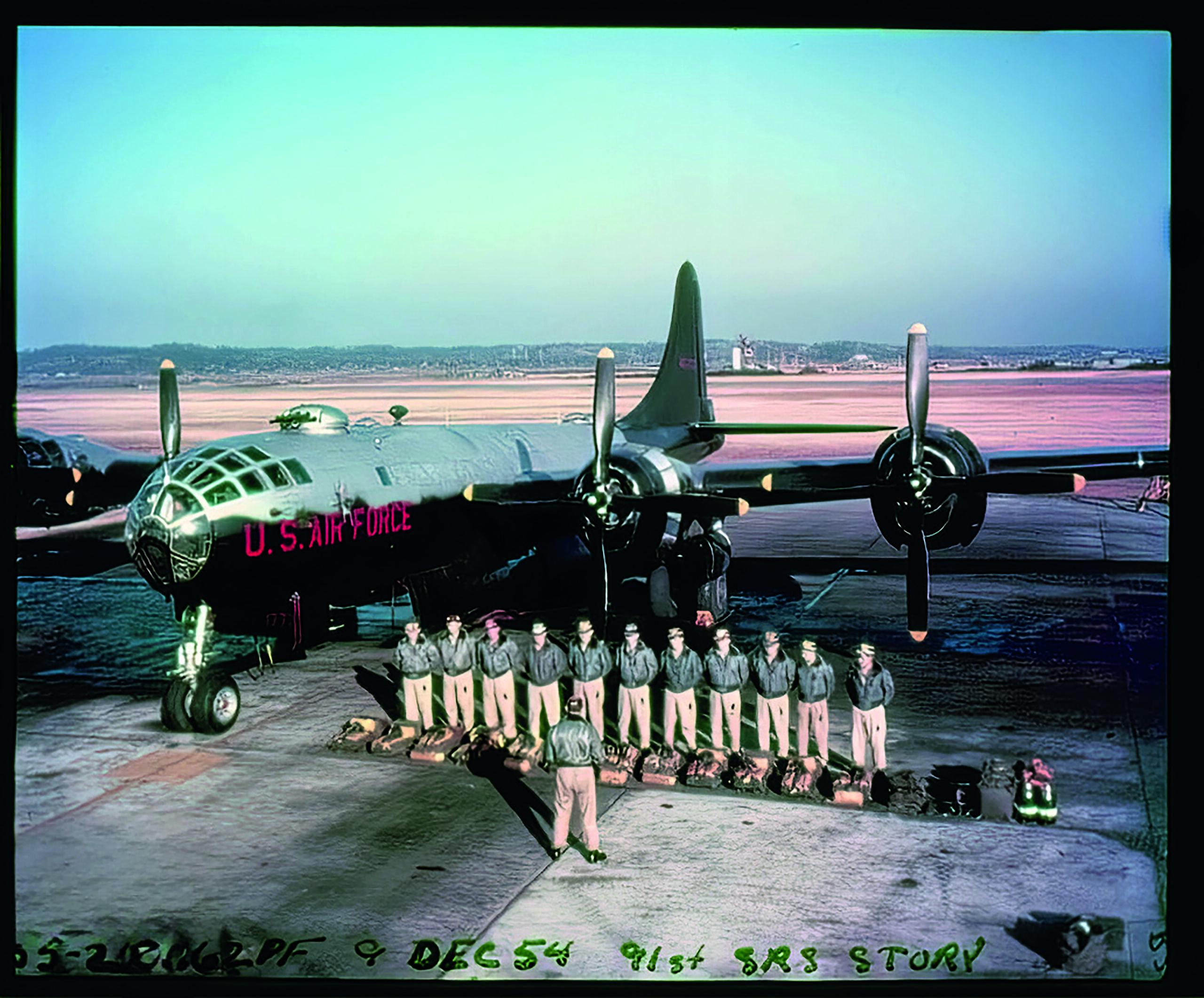
Extract from the book ON THE EDGE – PART 2 – During the 1950s, the United States conducted numerous clandestine reconnaissance missions targeting Eastern Europe and the eastern regions of the Soviet Union. The objective was to map Soviet military infrastructure, assess nuclear capabilities, and monitor air defense systems, intelligence deemed vital to U.S. national security. Fears of a surprise nuclear attack loomed large in Washington.
Policymakers were concerned that Moscow might possess a strategic advantage in long-range bombers. These anxieties fueled the now-infamous concepts of the “bomber gap” and later the “missile gap.” Due to the Soviets’ secrecy and refusal to share information, the United States relied heavily on aerial reconnaissance to bridge critical intelligence gaps.
Aircraft such as the RB-29, like the one above, RB-47, and later the high-altitude U-2 were deployed. Some missions operated just outside Soviet airspace, often over international waters or from bordering countries like Japan, Norway, and Turkey. Other sorties penetrated Soviet territory at considerable risk. In addition to aerial photography, these aircraft gathered electronic signals intelligence (ELINT), including radar emissions and communications data, crucial for evaluating the scope and sophistication of Soviet defenses. (Photo: NARA)